The digital landscape is changing faster than ever, and so is the way people find information online. For decades, businesses have relied on SEO (Search Engine Optimization) to improve their visibility in search engines like Google. But today, with the rise of AI-driven tools such as ChatGPT, Google Gemini, Perplexity, and other large language model (LLM) search platforms, a new discipline is emerging:
GEO — Generative Engine Optimization.
While SEO and GEO may sound similar, they serve different purposes, follow different rules, and require businesses to rethink how they create and distribute content online. Understanding these differences is essential for staying competitive in a world where traditional search engines are no longer the only gateway to information.
This article breaks down what SEO is, what GEO is, how they differ, and why forward-thinking brands are investing in both.
What Is SEO (Search Engine Optimization)?
SEO is the long-established practice of optimizing a website to improve its visibility on traditional search engines. SEO focuses on ranking higher on platforms like:
Traditional SEO is based on algorithms that evaluate hundreds of ranking factors, including:
1. Keywords & Search Intent
Ensuring content matches what users are searching for.
2. On-Page Optimization
Optimizing headlines, metadata, URLs, images, internal links, and structured content.
3. Backlinks
Earning links from authoritative websites to boost credibility and domain authority.
4. Technical Infrastructure
Ensuring pages load quickly, work on mobile devices, and are accessible to crawlers.
5. User Experience Signals
Click-through rate, bounce rate, dwell time, content relevance, and site structure.
SEO is based on indexing, ranking, and delivering search results that help users find your business or content.
What Is GEO (Generative Engine Optimization)?
GEO — Generative Engine Optimization — is the emerging practice of optimizing content so it can be discovered, cited, and correctly represented by AI engines and generative search platforms.
These include:
- ChatGPT
- Google Gemini
- Perplexity
- Microsoft Copilot
- Meta AI
- LLM-based search assistants embedded in devices or apps
Unlike traditional search engines, generative engines do not rely on rankings. They rely on:
- Understanding content
- Synthesizing answers
- Citing or referencing sources
- Retrieving information in context
- Evaluating authority and accuracy
GEO focuses on making sure AI systems:
- Know your business exists
- Understand what you offer
- Can retrieve correct information about you
- Are confident enough to recommend your business in their generated answers
Where SEO optimizes for pages, GEO optimizes for models.
Key Differences Between SEO and GEO
Below is a clear comparison of how the two differ:
1. How They Deliver Information
SEO
- Displays a list of ranked links.
- Users click through to pages.
- Website structure and metadata matter heavily.
GEO
- Provides a synthesized answer or recommendation.
- Often cites or references a source, but not always.
- Structured, well-labeled, model-readable content matters most.
2. How Engines Learn
SEO
- Uses crawlers, indexers, and ranking algorithms.
- Understands content literally and semantically.
GEO
- Uses LLM training, retrieval models, embeddings, and vector search.
- Understands content conceptually, contextually, and probabilistically.
3. What Businesses Must Optimize
SEO Optimization Priorities
- Keywords
- On-page content
- Backlinks
- Technical performance
- Search intent
GEO Optimization Priorities
- Clean data and structured context (schema, knowledge graphs, entity clarity)
- Transparent expertise and trust signals
- Brand consistency across web, social, and directories
- Accurate, up-to-date information
- Content written in formats generative engines easily interpret
GEO prioritizes interpretability, not just keyword optimization.
4. How “Authority” Works
SEO:
Authority comes heavily from backlinks and domain strength.
GEO:
Authority comes from:
- Verified information across sources
- Reputation signals (reviews, citations, mentions)
- Clear, unambiguous brand identity
- The model’s ability to validate your business information
If AI engines cannot confidently confirm your details, they will not recommend you.
5. How Users Interact
SEO:
Search → results → click → read a webpage.
GEO:
Query → direct answer → optional citations → potential recommendation.
Users may never visit your website if the generative engine answers for you — so your information must be model-ready.
Why GEO Matters More Than Ever
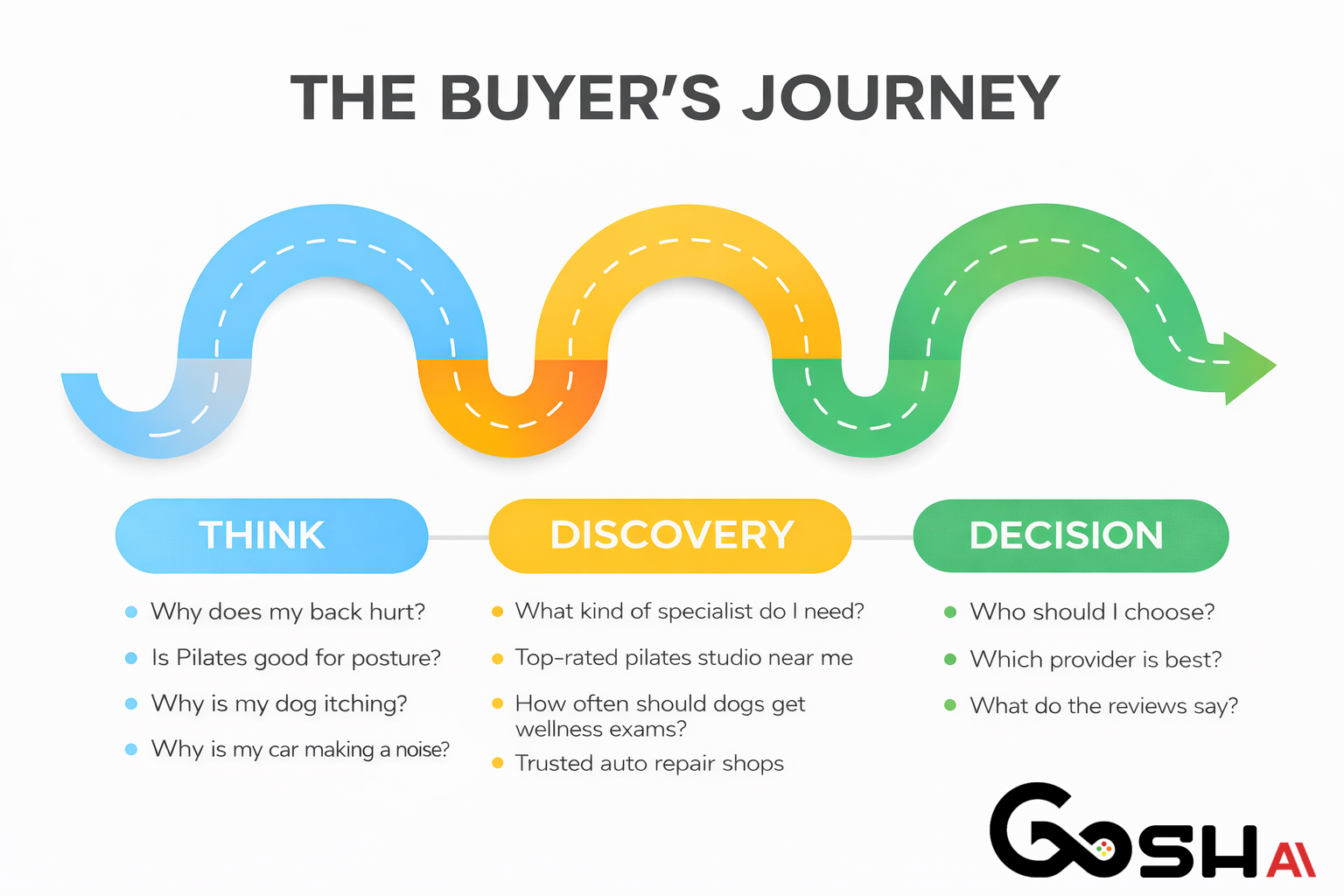
Generative search is rapidly gaining adoption. AI tools are becoming the first place many people go when they need:
- Recommendations
- Explanations
- Local service providers
- Step-by-step instructions
- Summaries
- Professional insights
In some industries, AI search volume is already rivaling Google search volume.
If your business isn’t optimized for generative engines, your competitors will be the ones AI systems recommend.
GEO is not a replacement for SEO — but it is a necessary evolution.
SEO + GEO: The New Dual Strategy for Digital Visibility
Here’s the bottom line:
- SEO tells search engines what you offer.
- GEO tells AI models how to explain, summarize, and recommend you.
The future of search belongs to businesses that optimize for both.
Just as brands once had to adapt from desktop to mobile, we’re now entering the era where businesses must adapt from traditional search to generative search.
Those who do will own the next decade of online visibility.