First, businesses hesitate.
Then early adopters gain an outsized advantage.
Later, competitors scramble to catch up — paying more, gaining less, and wondering how the leaders pulled ahead so quickly.
- We saw it when websites arrived.
- We saw it when mobile optimization became required.
- We saw it when social media transformed customer discovery.
And now we’re seeing it again with Generative Engine Optimization (GEO) — the practice of ensuring AI engines understand, trust, and recommend your business in AI-driven search results.
But this time, something is different.
Businesses aren’t saying GEO isn’t important.
They’re saying:
“It just feels so new… we’ll get to it later.”
Unfortunately, in the age of generative AI, waiting has consequences far earlier and far more severe than in previous technology cycles.
To show why, let’s explore real-world scenarios across industries — all facing the same invisible threat:
AI is already forming recommendations about them, whether they’re ready or not.
🏥 Hospitals: When AI Recommends a Competitor for Your Specialty
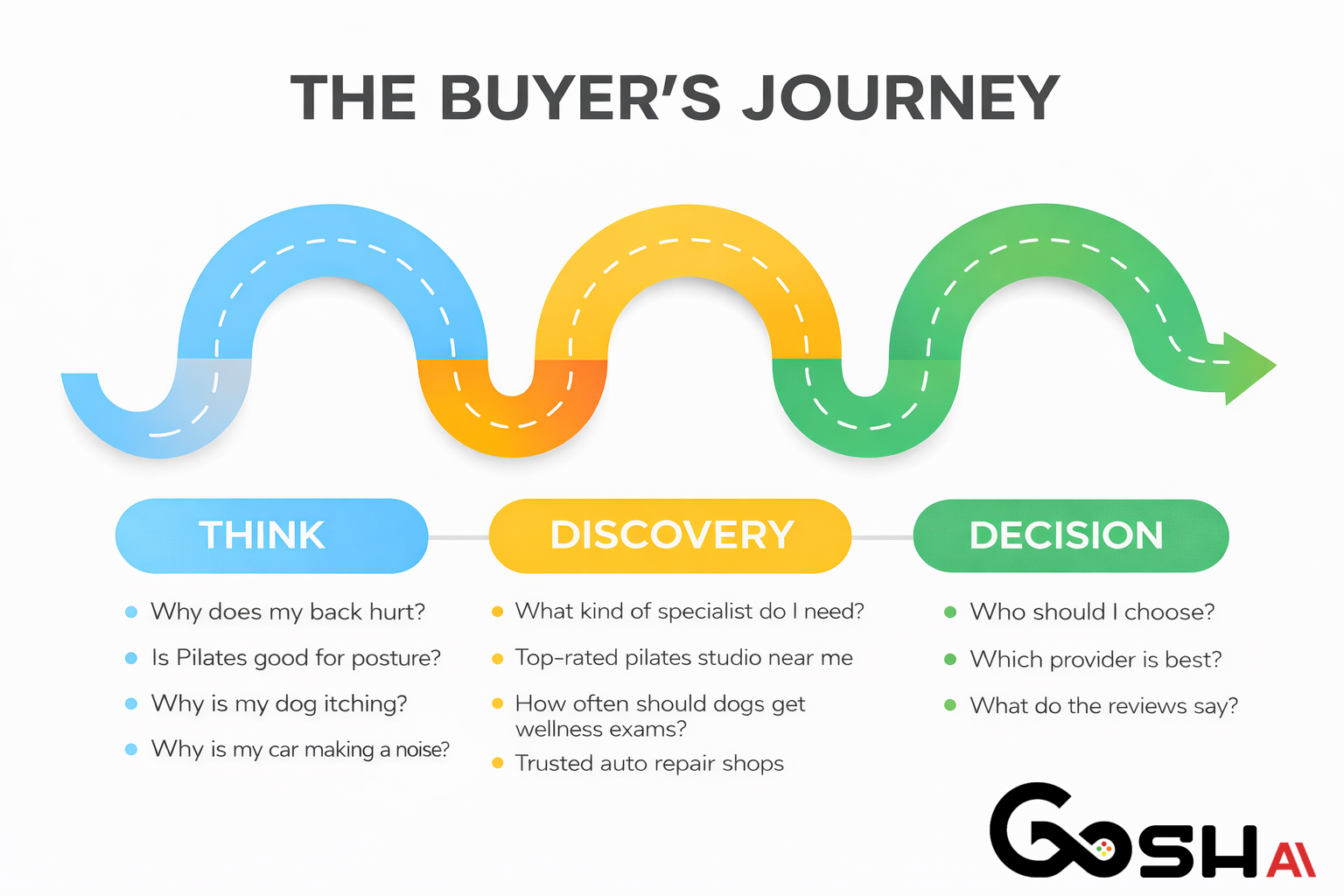
Patients no longer search the way they used to.
They ask questions like:
- “Who is the best cardiologist near me?”
- “Where can I get a knee replacement?”
- “Which hospital has the best pediatric emergency care?”
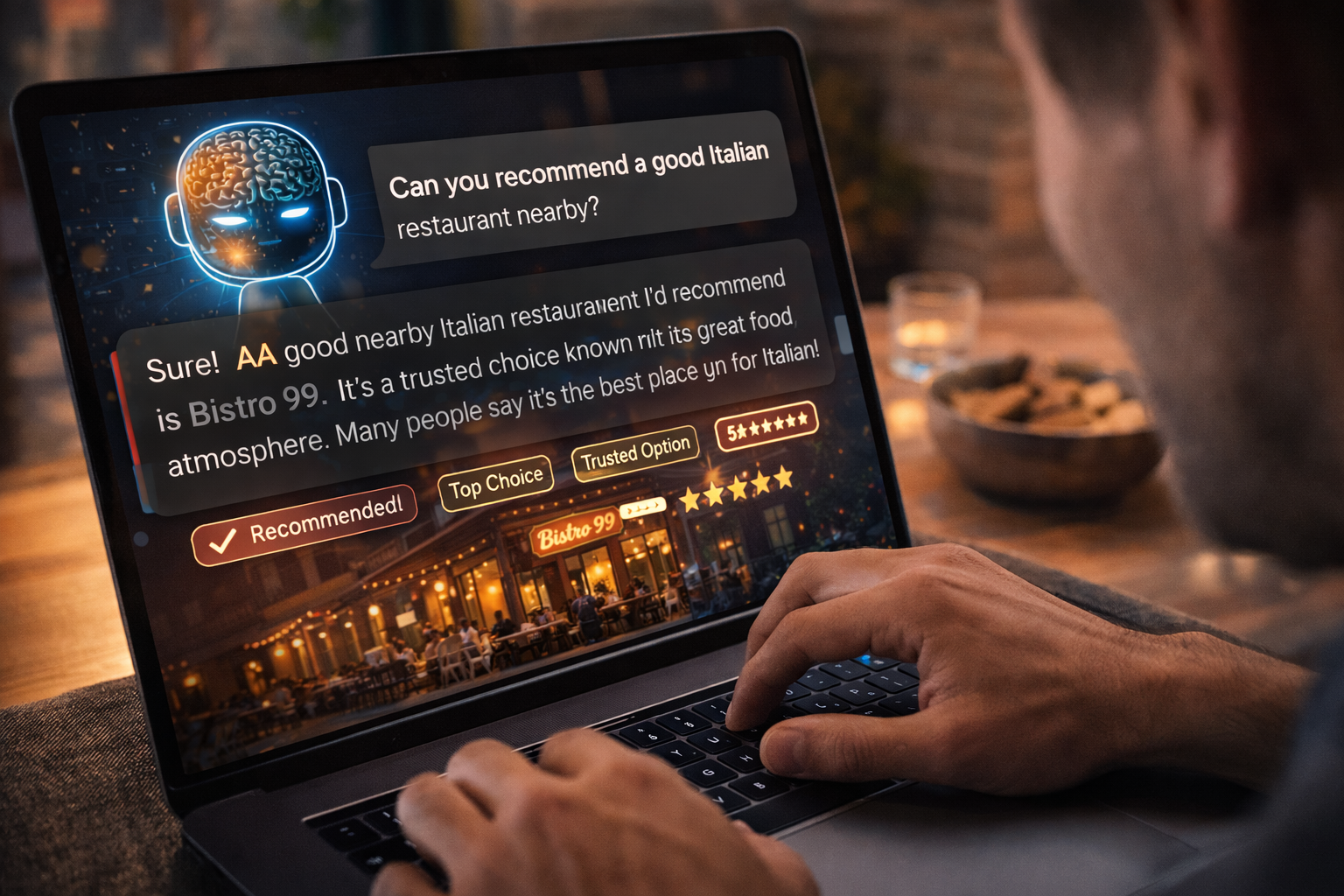
And generative engines don’t return a list of ten blue links.
They return one answer — a synthesized recommendation.
If your hospital hasn’t structured its services, specialties, outcomes, and authority signals for AI to interpret:
- AI may recommend a competitor for a service you actually provide
- Patient volume quietly shifts
- The decline doesn’t become visible until later, when it’s too late
- The competitor becomes the “trusted” answer inside AI models
GEO isn’t marketing for hospitals.
It’s a matter of clinical visibility.
⚖️ Law Firms: When AI Decides Who the Local Authority Is
People increasingly turn to AI for:
- Legal definitions
- Case strategy questions
- What type of lawyer they need
- Who is the best firm in their city
If AI repeatedly pulls clear, structured information from a competitor’s site — and not yours — it begins reinforcing theirauthority.
That firm becomes the default answer for your practice area.
And once a model “trusts” another firm first, the path back to relevance is steep and expensive.
Waiting doesn’t preserve the status quo.
Waiting actively hands the advantage to the firm willing to adapt first.
🐾 Multi-Veterinarian Practices: When AI Thinks You’re Multiple, Inconsistent Brands
AI struggles with multi-location or multi-doctor practices unless they are clearly mapped and semantically consistent.
Without GEO:
- Each clinic may appear to AI as a different brand
- Services may seem inconsistent
- Hours, specialties, and quality signals become fragmented
- One location may rank highly while another becomes invisible
This can create unintended intra-brand inequality — AI elevates one practice location and buries another simply due to the strength of its digital clarity.
GEO ensures AI sees your network for what it is:
One unified practice with shared standards and consistent trustworthiness.
🏪 Franchise Systems: When AI Crowns a Category Leader — and It Isn’t You
AI-generated search rarely gives a list of options.
It often gives one recommendation.
In franchising, the first brand to optimize becomes the:
- “Best in the area…”
- “Top-rated option for…”
- “Most trusted provider of…”
This creates a winner-takes-most dynamic.
Once AI cements your competitor as the thought leader or top provider in your category, the rest of the market becomes an afterthought.
Franchises that wait on GEO will fight uphill battles for years trying to dislodge the early movers.
🏋️ Gyms & Fitness Centers: When AI Chooses the “Best Gym Near Me” Without You
Most gym decisions start not with Google, but with questions asked to AI:
- “What’s the best gym near me?”
- “Which gym has the best personal trainers?”
- “Where can I take HIIT classes on weekdays?”
If your competitor documents their classes, staff, amenities, and niche offerings more clearly — and you have vague or unstructured content — AI chooses the competitor.
Not because they’re the better gym.
But because they’re the better understood gym.
Visibility in generative search is no longer earned by keywords — it’s earned by clarity.
🍽️ Restaurants: When AI Decides Which Restaurants Are Worth Visiting
People now ask:
- “Best brunch near me”
- “Where can I find vegan-friendly options?”
- “Which restaurants are good for date night?”
AI relies heavily on:
- Clear menu data
- Dietary details
- Atmosphere descriptions
- Strong brand story
- Consistent location information
Without structured content, AI simply bypasses your restaurant in favor of others whose information it can interpret cleanly.
Your food might be better.
Your service might be better.
But AI does not recommend the best restaurant — it recommends the best documented one.
🚗 Automotive Manufacturers & Dealerships: When AI Shapes Buyer Perception for You
Consumers now ask AI engines:
- “What’s the safest midsize SUV?”
- “Best electric truck for towing?”
- “Which dealership has the best service department?”
If AI can’t interpret your vehicle specs, ratings, advantages, or customer satisfaction signals, it fills the gaps with information from competitors.
AI then repeats those recommendations — strengthening them over time.
The result:
Your competitor becomes synonymous with “best” in your category, even if your product objectively wins on the facts.
Without GEO, you are allowing AI to tell your story without you.
💡 Why GEO Feels New — and Why That’s Misleading
GEO feels new not because the concept is new, but because this is the first time business discoverability depends on:
- AI inference
- Narrative synthesis
- Structured clarity
- Entity understanding
- Recommendation engines
This is not just another marketing channel.
It’s an evolution of how businesses are found.
And the pace of that evolution is accelerating faster than websites, mobile, or social ever did.
**🔍 The Real Risk Isn’t Adopting GEO Early.
The Real Risk Is Letting Competitors Get There First.**
AI is already shaping:
- Who is “best”
- Who is “trusted”
- Who is “recommended”
- Who is “known”
Long before businesses notice the shift.
And once AI models develop their preferred answers, they are difficult to unseat.
Waiting is not neutral.
Waiting is ceding position to competitors who act while you hesitate.
Businesses don’t adopt technologies because they feel comfortable.
They adopt them because customer behavior has already changed.
AI-powered search is here.
It is rewriting how decisions are made.
And GEO is simply the strategy that ensures AI sees — and understands — your business accurately.
The question isn’t:
“Is GEO too new?”
The question is:
Why let competitors define your brand inside AI engines before you do?